Dilip Kumar – as Writer and Producer
Ganga Jumna (1961)

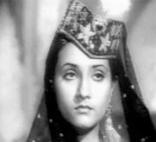
Dilip Kumar and Vyjantimala in Ganga Jumna (1961)
Here’s a jewel of a film and a performance that has stood the test of time. Dilip saab’s work in this trendsetting film is a text book in acting. Each scene speaks eloquently of the vitality, indeed the life-force that he infallibly invests in his screen personae.
Ganga Jumna was a daunting challenge, which he has often told me, that he undertook with a great deal of trepidation. He had to vault over to the other extreme end of his personality to portray a rustic— a vociferous peasant who rattles out his words in the unfamiliar, colorful Bhojpuri dialect.
The project was all the more trying because none of the stalwarts of the time — Mehboob Khan, Bimal Roy, S. Mukherji and K. Asif— encouraged him to go ahead with it. But at the end of his travails, the result was a glorious product.
When he first appears on the screen as the robust Ganga, astride a bullock-cart, he was a bit of a shock. This image could not be reconciled with that of the love-stricken introvert which he had mastered to perfection.
I loved Ganga’s verbal combats with Dhanno. And may I add, physical combats too. He teases Dhanno at any given opportunity. And there is an element of tongue-in-cheek as he thrills to city life. “Ae Munna, dekh him tere liye phountain lawa hoon,” he says delightedly.
The earthy dialogue, the scene constructions and the performances were heart-stirring. Of special note is the festive, joyous kabaddi scene: Dhanno dares him to win against the visiting ‘Banke.Jawan’ team from Tanakpur.
The sequence has an interesting graph, building up like a piece of music does to a crescendo. I still hold my breath as the competition starts, as I see Ganga’s despondency when his team has to launch into a song, as I keep pace with the gaining of ground. And finally, there is the thrilling victory… followed by the chase. Ganga leaves the spot of triumph to give Dhanno a sound thrashing.
I liked the innocent reverence in which the elder brother Ganga holds his younger brother Jumna. Concurrently, there is the younger brother’s unquestionable regard for Ganga. Both are bonded by their ongoing struggle for a better life.
The finale is as bitter as it is poignant. Driven by his sense of duty, Jumna is compelled to shoot down Ganga. The death scene is vastly moving—Dilip Kumar scaled new heights with this moment, wrenching the hearts of the audience before the lights came on in the auditorium.
Ganga Jumna was a personal triumph for him, not only for a flawless performance but also for the distinction of having authored the story and the script. He was always involved in the film’s text… ever since Milan (1946), he was involved in the writing of his films.
When I see Ganga Jumna today, I cannot help marvelling at the performances of all the artistes which indicate the teamwork spirit of those tines. The technical values— in particular the editing— is on par if not better than anything you might appreciate in the Indian cinema of the 1990s – Saira Bano (Filmfare Magazine)
 ABOUT THIS AUTHOR
 Cineplot Music
 Cineplot Photo Gallery
 Iranian Cinema - Iran Director Banned From Travelling to Venice Fest
 Two Debutants / Same Film Curse...
 Lollywood - Future marriage plans and projects
 Nasreen
Reply