Mukesh – Part 3

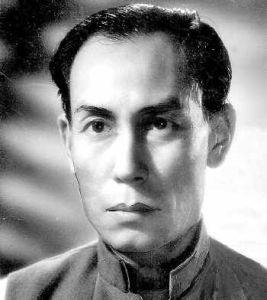
Mukesh
There were other actors who benefited from the use of Mukesh’s vocals. Dilip Kumar who openly admitted his admiration for the singer. The pensive ‘Mr. Bharat’ Manoj Kumar who used Mukesh’s voice in most of his films. ‘Tum bin jeevan kaise beeta poocho mere dil se’sings the forlorn Manoj to the reluctant sanyasin Sadhana in Anita. There’s the wonderfully hummable ‘Ek pyar ka naghma hai’ from the painfully realistic Shor. And there are flirtatious songs from ‘Sanyasi’ where a chaste Manoj resists the gorgeous temptress Hema Malini.
Even the debonair, head shaking, puff sporting Dev Anand had his share of introspective songs from the noble Mukesh. The beautiful “bidaai” song with its sensitive chorus from Bombai Ka Babu bewitches us completely. A regal Suchitra Sen, large liquid eyes brimming with tears, walks away from her father’s home and true love in ‘Chal ri sajni ab kya soche, Kajra na bah Jaye rote rote’. The song was made for the soft, brooding vocals of Mukesh. Today, its virtually impossible to imagine that S.D. Burman had used Mukesh’s voice only when the original choice Kishore Kumar was unavailable. Mukesh had even been told that his rendition would be scrapped if it wasn’t up to the mark!
Even in contemporary cinema Mukesh continued to sing for younger heroes who were completely identified with Kishore’s voice. The sweet songs of pleasure and pain from Anand sung by the stricken Rajesh Khanna could not have found a better voice, ‘Kahin door jab din dhal Jaye’ or ‘Maine tere liye hi saath rang ke’.
The angry young man Amitabh plays the mellow poet in Kabhi Kabhie and sings to the doe eyed Rakhee ‘Kabhi Kabhie mere dil mein’ or ‘Main har ek pal ka shair hoon’. Kabhi Kabhi came to typify mature mellow love, far away from the jiggling, bustling madness of modern love.
Mukesh’s extraordinary humility and total sincerity made him an extra – special person. When Kalyanji — Anandji wanted Mukesh to dub the lines sung by Manhar in the duet ‘Aapse humko bichde huey’ as agreed to by Manhar, Mukesh refused with a smile, ‘Why break the boy’s heart! He has done such a fine job’ he said.
Early in his career, Mukesh had frankly told composer Sardar Malik to give him songs, that would camouflage his tendency to go offkey. Later, Mukesh was always quick to admit that Mohammed Rafi was markedly more versatile.
As Anil Biswas says, ‘During my career of fifty years as a music director I’ve come across thousands of people. I must say that Mukesh was a real gem, an elevated soul, sincere to the core. Warm and friendly and totally unaffected by the glamour and hullabaloo of life’. Mukesh was known to serve as a mediator among warring parties and within the film industry was fondly referred to as ‘Guni Jaan’ (Noble Soul).
Many music directors who were just starting out on their career came to Mukesh with songs in their heart and no money in their pockets. Mukesh gladly sang their songs for free. Nitin, recalls how bothered his father would get, when he learnt that on concerts abroad, his musicians had to stay-in less expensive hotels. Mukesh would always insist on shifting to the same inexpensive accommodation.
‘No wonder his musicians simply adored him’ Nitin remembers fondly. Mukesh never forgot old friends or favors. Friends in school, remember Mukesh regaling them with Saigal’s songs during the lunch break Accompanying him on the harmonium was Roshan Lal who himself later became a famous music director in Mumbai. Mukesh and Roshan remained friends for life.- Roshan recorded the immortal ‘Teri duniya mein dil lagta nahin’ in his dear friend’s voice. In turn, Mukesh used Roshan for his first and only production Malhar. It was only right for Mukesh to sing Roshan’s last songs ‘Oh ho re taal miley’ and ‘Dulhan Se hamara Milan hoga’ from Anokhi Raat.
In 1965, Mukesh got together with Motilal and Anil Biswas for the film ‘Choti Choti Baatein’ — produced by Motilal. When Motilal passed away before the film’s completion, Mukesh look upon himself the responsibility of completing the film, undergoing tremendous financial difficulties to concretize Motilal’s dream project.
Obviously such a good, generous soul would be surrounded by friends who genuinely cared. In the 50′s, due to the lack of assignments, Mukesh had to withdraw his children from school. Actors like Raj Kapoor, Manoj Kumar rallied around him, using his voice to deliver hit after hit .
 ABOUT THIS AUTHOR
 Cineplot Cinema & Films
 Cineplot Photo Gallery
 Hemant Kumar's Song List (1951 - 1960)
 Legends - Lata Mangeshkar
 Album Review: Siege’s Police
 S.D. Burman (1906 - 1975)
 Talat Mahmood's Factfile
Reply